
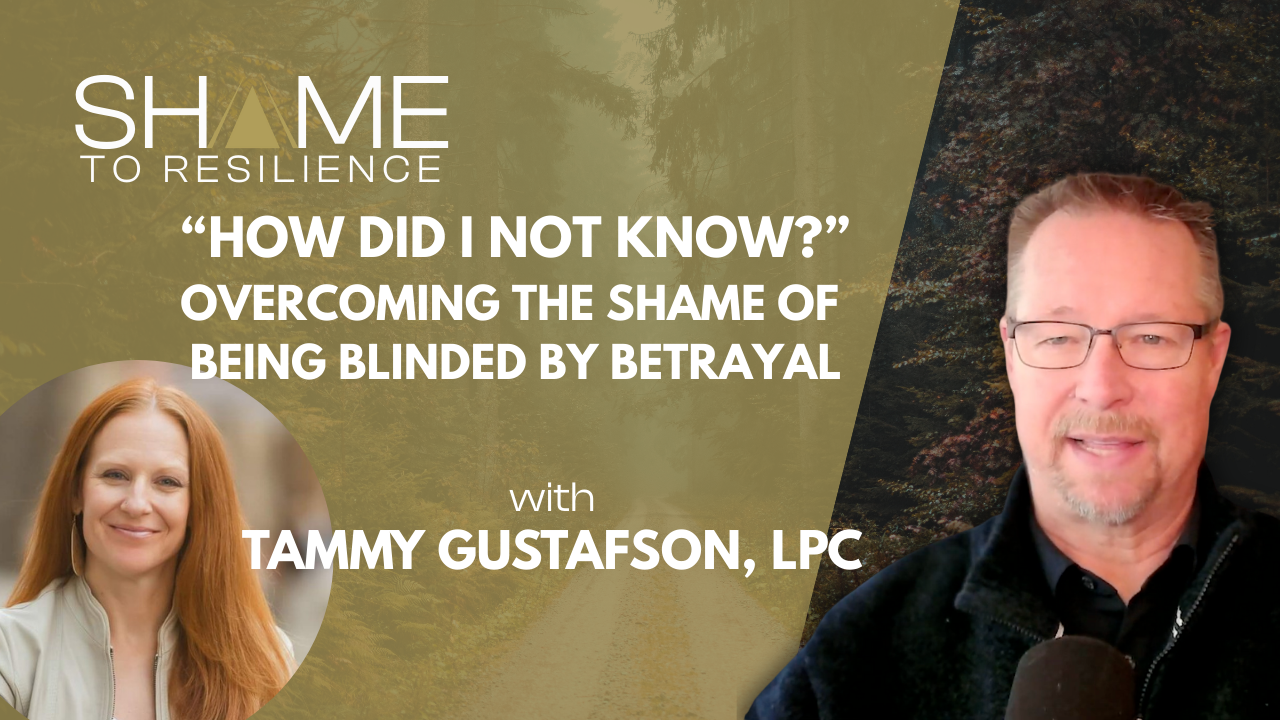
The Shame of Staying: Healing from Betrayal Trauma
If you’ve chosen to stay after a betrayal, you might be battling a heavy, silent shame. Society says strong people leave, but the reality is far more complex. In this post, we explore why you aren't foolish for staying and how to navigate the crushing weight of self-blame. Discover how to reclaim your power, set boundaries, and move from brokenness to brave on your healing journey.
When a partner cheats, society often sends a clear message: a strong person leaves immediately. But reality is far more complex. Most people actually stay, and if you're choosing to work on your relationship, you might be battling a crushing wave of shame. It’s a silent struggle, an internal conflict layered on top of the initial shattering pain of betrayal.
This feeling is something I see often in my work, a heavy burden that isolates people when they need connection the most. To explore this difficult topic, I recently spoke with Tammy Gustafson, a licensed professional counselor, coach, and the host of the annual Betrayal Healing Conference. Tammy brings a unique and powerful perspective; she was a trauma therapist for years before experiencing her own discovery of betrayal. She understands both the clinical theory and the personal, gut-wrenching pain.
In our conversation, we dove into the nuanced layers of shame that partners face and, more importantly, the path toward healing and empowerment.
Download the Worksheet
The External Pressure: "Why Don't You Just Leave?"
One of the first sources of shame comes from the outside world. There's a prevalent, unspoken cultural script that says "happy people don't get cheated on" or "if you were a better partner, this wouldn't have happened." This narrative places an unfair burden on the betrayed partner, a form of victim-blaming that can be incredibly damaging.
As Tammy explained, many partners internalize these messages. They start to believe they are somehow at fault. Maybe they weren't attentive enough, affectionate enough, or "enough" in some other way. This self-blame is then compounded by the judgment—real or perceived—from friends, family, and society at large.
Before the betrayal, you may have even told yourself, "If my partner ever cheated on me, I'd be out the door." But when it actually happens, life isn't so simple. There are shared histories, children, finances, and a deep love that doesn't just vanish overnight. The decision to stay and work on the relationship is not a sign of weakness; it's a choice made amidst immense complexity and emotional turmoil. Yet, that choice is often met with a chorus of external and internal voices whispering, "You should be stronger. You should leave." This creates a profound sense of shame for simply trying to navigate an impossible situation.
The Internal Struggle: "How Could I Have Been So Stupid?"
Beyond the societal pressure, a deep internal shame often takes root. I hear this from clients all the time: "How could I have not seen this?" or "I feel like such a fool." This feeling is what some call "hindsight bias." Once the truth is revealed, all the little signs that didn't make sense before suddenly click into place, and it feels so obvious.
This can lead to a sense of self-betrayal. You start to question your judgment and your reality. But it’s crucial to understand: you are not stupid or foolish. You were in a relationship with a fundamental agreement of trust. That agreement was broken unilaterally by someone who was likely using deception and gaslighting to hide their actions. You didn't see it because it was actively being concealed from you.
As Tammy shared from her own experience, even as a trained therapist, she felt this sting of "I should have known." It’s a common and powerful part of the trauma. This internal narrative can lead to isolation, as the shame makes you want to hide from the world, and even from yourself.
The Path to Healing: From Shame to Empowerment
So, how do you begin to move through this sticky, persistent emotion of shame? The journey is not quick or easy, but it is possible. It involves shifting your focus, reclaiming your power, and extending compassion to yourself.
1. Reassigning Responsibility
The first step is to place the responsibility for the betrayal where it belongs: on the person who made the choice to betray. As Tammy and I discussed, no matter what was happening in the relationship, there were countless ways your partner could have addressed their dissatisfaction or personal struggles without breaking their commitment. Their choice to step outside the relationship was 100% their own.
You were not perfect—no one is. But you did not cause this. Internalizing this truth is a foundational piece of healing. It allows you to stop carrying a burden that was never yours to hold.
2. The Power of Connection
Shame thrives in isolation. Its antidote is connection. One of the most powerful steps a betrayed partner can take is to connect with others who have gone through the same experience. In a group setting, you quickly realize you are not alone.
When you hear other intelligent, strong, and caring individuals share the same feelings of foolishness or self-blame, you can see how untrue that narrative is for them. It becomes easier to then see that it's untrue for you, too. Hearing "Of course you didn't see it, he was hiding it," from someone who truly understands can be the first crack of light that breaks through the shame.
3. Reconnecting with Your Identity
Betrayal can shatter your sense of self, and shame solidifies that feeling of being "broken" or "unworthy." A critical part of healing is reconnecting with your core identity. Remind yourself of who you are outside of this trauma. You are loving, you are strong, you are a person of value.
As Tammy beautifully put it, when we can get grounded in our own identity, we can start to "talk back to the shame." This isn't about ignoring the pain, but about refusing to let the shame define you. This shift is incredibly empowering and impacts not just your recovery from betrayal, but your entire sense of personhood.
4. The "All Ships Rise" Dynamic
In the chaotic aftermath of discovery, there’s often an unspoken battle over whose emotions get center stage—the betrayer’s regret or the betrayed’s pain. My experience, which Tammy confirmed, is that true healing for the relationship can only begin when the betrayed partner shifts the focus back to their own healing.
This means setting boundaries, prioritizing your safety (emotional and physical), and working on your own recovery. This act of differentiation is profoundly empowering. It also forces the betraying partner to confront their own shame, which is often the catalyst they need to begin their own genuine work. When the betrayed partner steps into their power, it creates the potential for all ships in the harbor to rise together. He can't show up with empathy for you if he is trapped in his own shame. By focusing on your healing, you inadvertently create the only real path for his.
Your Roadmap: From Broken to Brave
Navigating this journey can feel like falling through a black hole, with no sense of which way is up. This is why Tammy has poured her personal and professional experience into her upcoming book, Broken to Brave. She provides a roadmap for healing, breaking the journey down into distinct phases.
The book acts as a compassionate guide, helping you understand where you are in the process, what to focus on, and what to expect next. It gives you permission to feel what you feel and to take the path that is right for you. It’s a reminder that while the path is counterintuitive and difficult, you are not crazy, and you can make it to the other side.
Healing is not one single moment of arrival but a series of small steps. It's the hard conversation you have, the moment you are vulnerable in your support group, the day you stand up for yourself. Each step builds on the last, slowly moving you from a place of brokenness toward a future defined by your own strength and resilience.
It’s time for him to take the next step. If your partner is ready to move beyond shame, take true accountability, and start building the foundation for genuine healing, this workshop can guide him.
The Shame to Resilience workshop is designed to help men do the difficult work of confronting their actions and developing the empathy needed to repair the hurt they've caused. This is his opportunity to grow, and a chance for you both to build a new, stronger future.
Share this with him: https://workshop.shametoresilience.com/