

The Best Betrayal Trauma Books: A Therapist's Recommended Reading List
Written and clinically reviewed by Duane Osterlind, LMFT, CSAT-S
Published: July 23rd 2026·
Last reviewed: August 4th 2026
A quick note of transparency: some links below are Amazon affiliate links, which means I earn a small commission if you purchase through them — at no extra cost to you. As an Amazon Associate I earn from qualifying purchases. I only recommend books I actually use in my clinical work and recommend to my own clients.
Start Here: Why These Books
If you're reading this, there's a good chance you're lying awake at night with more questions than answers. I see it every day in my work with betrayed partners — the shock, the racing thoughts, the ache to understand what just happened to your life. After working with hundreds of clients healing from betrayal, these are the betrayal trauma books I recommend most often — the ones I actually hand to people sitting across from me.
Understanding what's happening to you is the first step in healing. The right book gives you a place to put all that trepidation and anxiety — a way to make sense of what you're going through, instead of carrying it alone in the dark. Many of these authors have lived through betrayal themselves and write from personal experience. There's something powerful about seeing yourself in someone else's story and realizing, maybe for the first time, that you are not alone.
And if you're the partner who caused the harm — these books offer you an incredible opportunity to understand your partner's trauma from the inside. If you genuinely want to repair what's been broken, I highly recommend reading them. This is what it looks like to show up.
I've also included books on shame and building shame resilience, because in my experience, shame is what keeps healing stuck — for both of you. Check those out as well.
For The Betrayed Partner
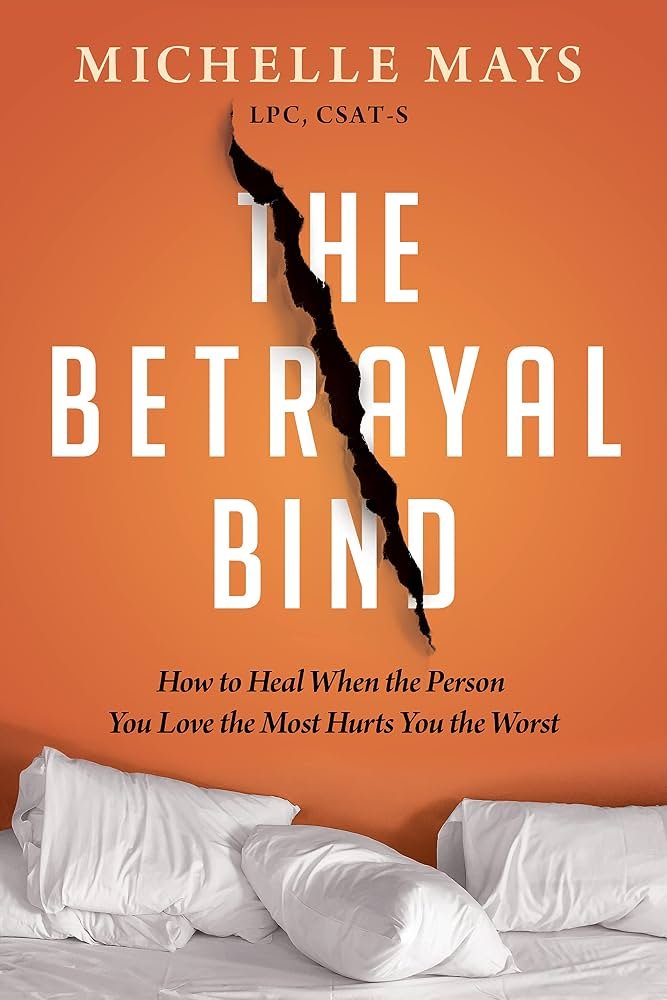
The Betrayal Bind: How to Heal When the Person You Love the Most Hurts You the Worst
⭐ "If you only read one" pick — betrayed partner section
Michelle Mays, LPC, CSAT-S (2023)
Best for: the partner caught in the impossible place of needing comfort from the very person who caused the wound.
This is probably one of the most-read books by partners struggling with betrayal, and for good reason. Michelle has an extremely easy-to-read, compassionate way of articulating the impact of betrayal — walking through the shame, the self-compassion, all of it — and many partners feel deeply validated after reading it. She writes through the lens of our attachment system: betrayal breaks the attachment bond with the person you're closest to, shattering trust and leaving you feeling unsafe and violated. And she names the exact dilemma that makes this trauma so uniquely painful: "I want to be comforted by you — but you're also the person who hurt me." That's the betrayal bind, and if you're living in it, this book will help you understand you're not crazy for feeling torn in two.
Duane's note: I also recommend this one to the partner who did the betraying. If you want to understand what your actions actually did — not to punish yourself, but to truly get it — Michelle will show you, with a compassion that makes the truth bearable enough to face. (And when you're ready for the next step, Tammy Gustafson's Broken to Brave — which Michelle wrote the foreword for — picks up right where this one leaves off.)
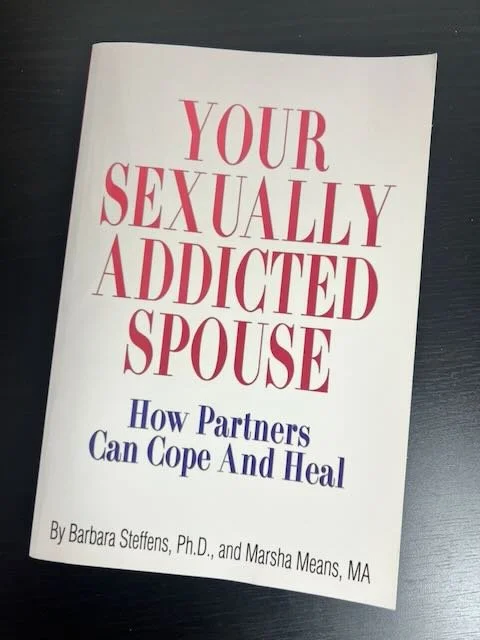
Your Sexually Addicted Spouse: How Partners Can Cope and Heal
Barbara Steffens, PhD, LPCC & Marsha Means, MA (2009)
Best for: the partner who's been made to feel like they're the problem — or told to go work on "their part" in the addiction.
This is the book that changed everything for partners. Dr. Barbara Steffens was one of the pioneers in shattering the stigma and shame around sex addiction — she challenged the long-held idea that partners of sex addicts were "codependents" and showed what the field now recognizes: partners are trauma survivors. The stories and examples throughout this book reveal the real impact sexual betrayal has on the people surviving it, while always leaning toward empowerment, health, and hope.
Duane's note: What I love about this book is how directly it speaks to the isolation — that loneliness of not knowing where to turn for help. If you've been sitting in that silence, this one is a hand reaching in.
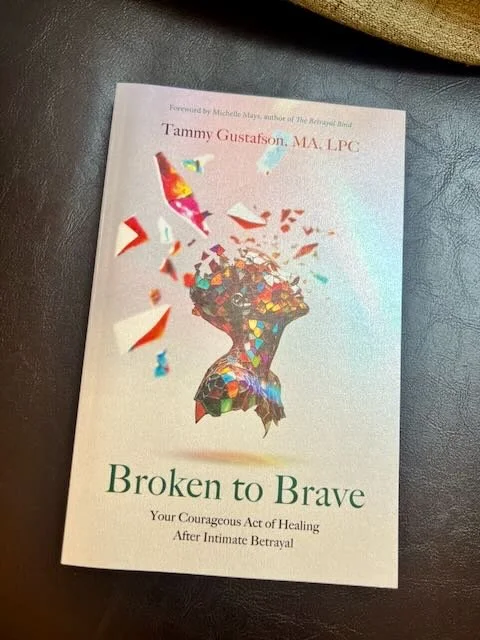
Broken to Brave: Your Courageous Act of Healing After Intimate Betrayal
Tammy Gustafson, MA, LPC (2025) — foreword by Michelle Mays
Best for: the partner who's ready to stop just surviving and start actively reclaiming their power and autonomy.
What I love about this book — and about Tammy — is her fierce advocacy for partners reclaiming their power after betrayal. She writes from her own lived experience, sharing how she learned to incorporate her healing while dealing with everything betrayal trauma brings. But this isn't just her story — Broken to Brave is a roadmap for yours. I recommend it to clients because it's genuinely empowering: it shows you there are real things you can do to move through this process, step by step.
Duane's note: Tammy also joined me on the Shame to Resilience channel for a powerful conversation about the shame of staying and healing a relationship after betrayal — The Shame of Staying: Healing from Betrayal Trauma and you'll understand why I trust her voice on this.
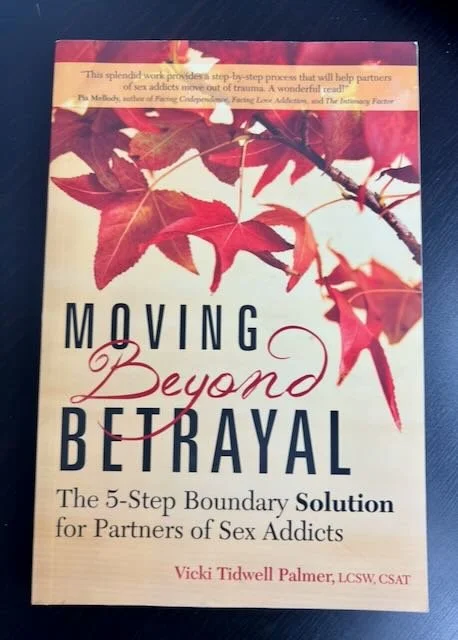
Moving Beyond Betrayal: The 5-Step Boundary Solution for Partners of Sex Addicts
Vicki Tidwell Palmer, LCSW, CSAT (2016)
Best for: the partner who feels powerless in the chaos and needs to feel in control of their own life again.
This is a really great guide on how to set boundaries that empower the betrayed partner when their partner has struggled with compulsive sexual behavior or other addictive behaviors. It walks you through identifying, creating, and maintaining those boundaries — and that is incredibly empowering, for the partner and for the relationship. What I love is how much direction it gives in the crisis itself: it helps you feel more in control of your life when everything feels out of control. And it helps with something else, too — looking honestly at whether this relationship is something you want to continue. Good boundaries are what make that kind of clarity possible.
Duane's note: If there's one thing I'd say over and over again, it's this: when a betrayed partner has firm boundaries, it enables the relationship to move forward and heal. Boundaries aren't walls against your partner — they're the ground you stand on while you decide what comes next.
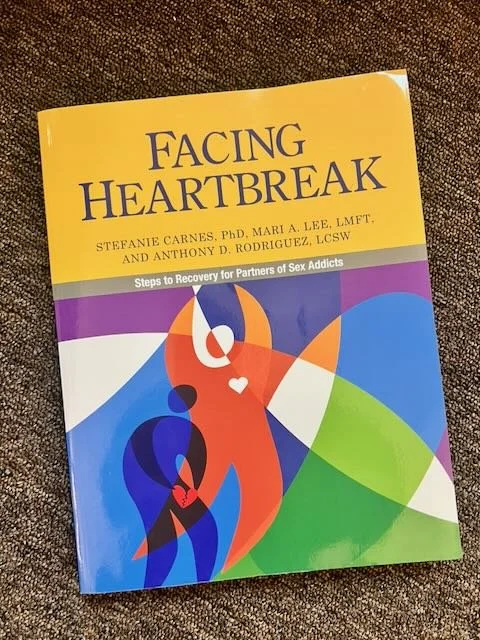
Facing Heartbreak: Steps to Recovery for Partners of Sex Addicts
Stefanie Carnes, PhD, CSAT-S; Mari A. Lee, LMFT, CSAT-S; & Anthony D. Rodriguez, PsyD (2012)
Best for: the partner in early discovery who feels lost and uncertain and needs to know, concretely, what to do next.
This one is a workbook, and that practical edge is exactly why I recommend it. In the chaos of early discovery, structure is medicine — and Facing Heartbreak walks you through it step by step, chapter by chapter: setting boundaries, building a recovery plan, and working through the trauma itself, all grounded in the authors' extensive clinical experience with partners. If you're lying awake wondering "what am I supposed to do now?", this book answers that question one page at a time.
Duane's note: Mari Lee also joined me on The Addicted Mind Podcast — a conversation about building a culture of support through group therapy. It's not about betrayal specifically, but it speaks to something at the heart of this healing: you were never meant to do this alone. The warmth she brings to that conversation is the same warmth you'll find in these pages.
For The Betraying Partner
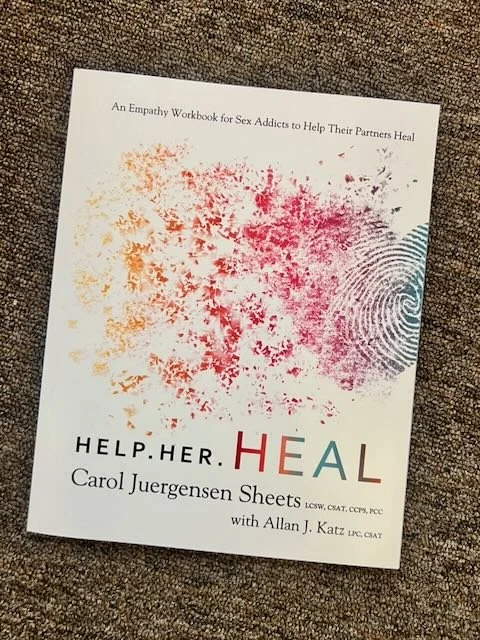
Help Her Heal: An Empathy Workbook for Sex Addicts to Help Their Partners Heal
Carol Juergensen Sheets, LCSW, CSAT & Allan J. Katz, LPC, CSAT (2019)
Best for: the man who betrayed his partner and simply doesn't know where to start — but knows he wants to help her heal.
This is often one of the first books I give to a betraying partner who wants to save the relationship and make amends for the harm he's caused. It builds a strong foundation for understanding the impact of betrayal trauma, then lays out a step-by-step guide to creating an environment of safety and beginning to help your partner heal. It's an easy read — but the work is difficult. And that's exactly the point.
Duane's note: Here's why I love assigning this workbook: when a client completes it, his partner can see the willingness. In a season when words have lost their value, a finished workbook is evidence — proof that he's willing to do the work, not just promise it. That alone can be the beginning of repair.

Answers in the Heart: Daily Meditations for Men and Women Recovering from Sex Addiction
Anonymous — Hazelden Meditations (1989)
Best for: anyone in recovery who wants to engage their healing every single day, a few minutes at a time.
This is a daily reflection book — a short reading every day, each with a topic and a promise to spark healing, hope, and personal growth. It's by far one of the best daily meditation books I've seen. It's thoughtful and timely, featuring a full year of readings and affirmations that complement the Twelve Steps for anyone recovering from an unhealthy dependence on sexual behavior. For someone who really wants to show up for their recovery daily, I cannot recommend it more.
Duane's note: Recovery isn't built in breakthroughs — it's built in small, daily returns to the work. That's why I love this book: two minutes each morning, and you've oriented your whole day toward healing. I highly recommend it for anyone in recovery.
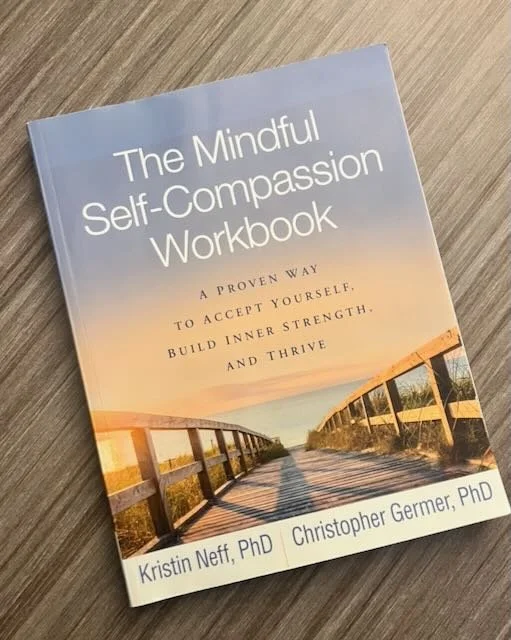
The Mindful Self-Compassion Workbook
Kristin Neff, PhD & Christopher Germer, PhD (2018)
Best for: the betraying partner who collapses into shame every time he faces the harm he's caused — and honestly, both partners.
Here's why this book matters so much for the partner who betrayed: in order to have empathy for your partner, you must have shame resilience. And in order to have shame resilience, you must practice self-compassion. Self-compassion is the place where healing starts — and working on it does not negate accountability. This isn't about letting yourself off the hook; it's about becoming someone who can stay present to the harm without drowning in shame, because a man drowning in shame can't show up for anyone. I love Kristin Neff's framework of mindful self-compassion, and this workbook walks you through it step by step.
Duane's note: I've placed this with the books for the betraying partner because it's critical for them — but truthfully, both people in a coupleship struggling to repair after betrayal can read this one. I consider it one of the necessary books in healing from betrayal.
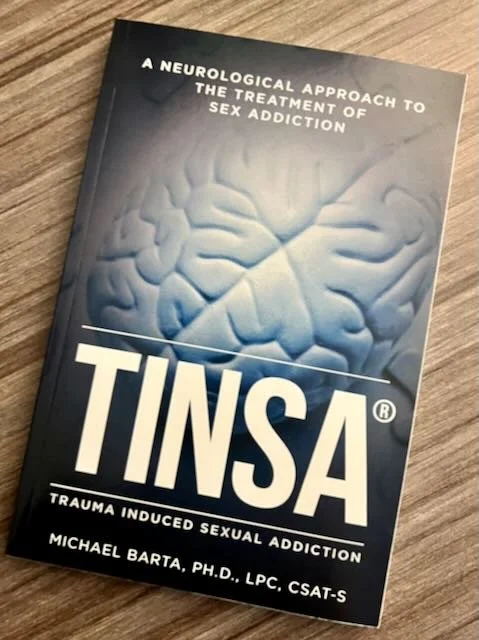
TINSA: A Neurological Approach to the Treatment of Sex Addiction
Michael Barta, PhD, LPC, CSAT-S (2018)
Best for: anyone haunted by the question "how could someone who said they loved me do this?" — and the betraying partner asking the mirror question: "how could I?"
So often, betrayed partners want to understand how someone who said they cared about them could betray them. TINSA helps answer that question by looking at the neurobiology of trauma and compulsive sexual behavior — and in doing so, it often helps the betraying partner understand his own actions and how he was capable of doing what he did. It opens a door to seeing all of this from a more complex perspective. And once again: this is not about losing accountability. It's about understanding the process by which deceptive sexuality can exist — because you can't dismantle what you don't understand.
Duane's note: This book helps the betraying partner understand himself on a deeper level — and eventually, when the time is right, share that understanding with his partner. That moment of honest self-knowledge, offered without excuse, can be profound for a couple. Michael also joined me on The Addicted Mind Podcast to talk through this model — listen to our conversation here.
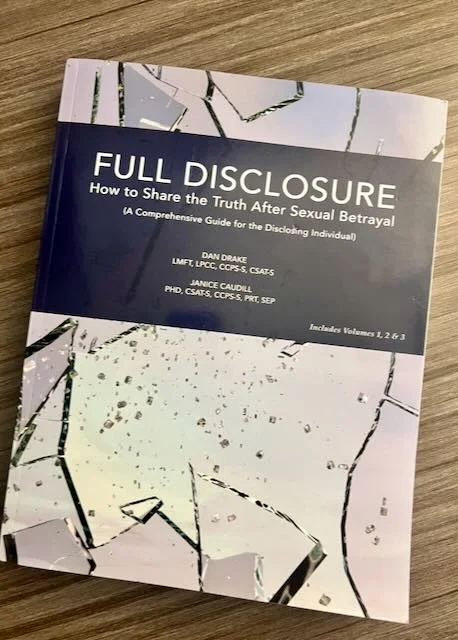
Full Disclosure: How to Share the Truth After Sexual Betrayal
Dan Drake, LMFT, CSAT-S & Janice Caudill, PhD (2019)
Best for: the betraying partner preparing to share the whole truth — and wanting to do it in a way that protects, rather than re-wounds, the person he loves.
Full therapeutic disclosure is an essential step in relationship recovery. Without it — without a shared reality — it's very difficult for any couple to truly move forward. What I like about this book is that it's clear-cut: it gives you the reasoning behind why a full disclosure is necessary, and then step-by-step instructions on how to do it. Most importantly, it walks you through the whole process of sharing the truth so you can protect your partner from the devastating impact of staggered disclosure — the drip, drip, drip of new discoveries that re-traumatizes her every time.
Duane's note: This is definitely a book the betraying partner needs. Dan joined me on Shame to Resilience to talk about what a full disclosure actually is and why it matters so much — https://www.shametoresilience.com/blog/healing-after-betrayal-the-path-of-disclosure.
If disclosure is ahead of you, watch that conversation first. (And for the betrayed partner: Janice and Dan also wrote companion "Seeking Truth" volumes written specifically for you, to help you prepare for disclosure on your own terms.)
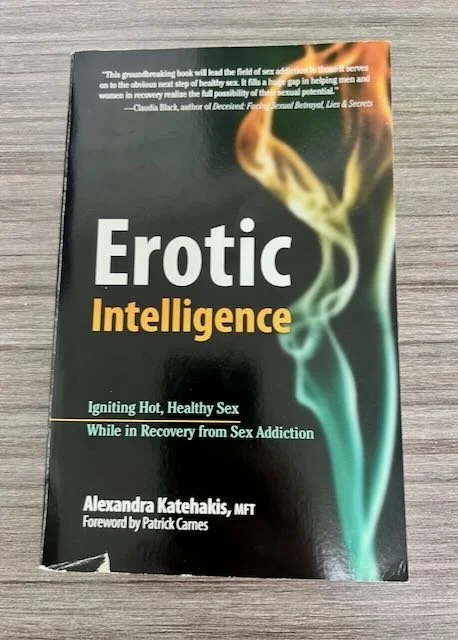
Erotic Intelligence: Igniting Hot, Healthy Sex While in Recovery from Sex Addiction
Alexandra Katehakis, PhD, MFT, CSAT-S, CST-S (2010)
Best for: the person in recovery who's asking, "if my old sexuality was compulsive — what does healthy even look like?"
This is a great book about learning healthy sexuality when you're in recovery from compulsive sexual behavior or sex addiction. Recovery can't just be about what you're stopping — at some point, it has to become about what you're building. Alexandra writes from a perspective of sexual health and sex positivity, and she helps you understand what healthy sexuality can actually look like: connected, honest, and alive. For many men in recovery, this is the first hopeful picture of their sexual future they've ever been given.
Duane's note: One caution, and I mean it: early in betrayal recovery, this book can be triggering — for the partner and for the person struggling with unwanted sexual behavior. Proceed with care, and save it for when your recovery has some solid ground under it. Alexandra also joined me on Shame to Resilience for a conversation about the shame that keeps you collapsed after infidelity — and how to stand again. Her wisdom in that conversation will tell you why this book made the list.
For The Coupleship
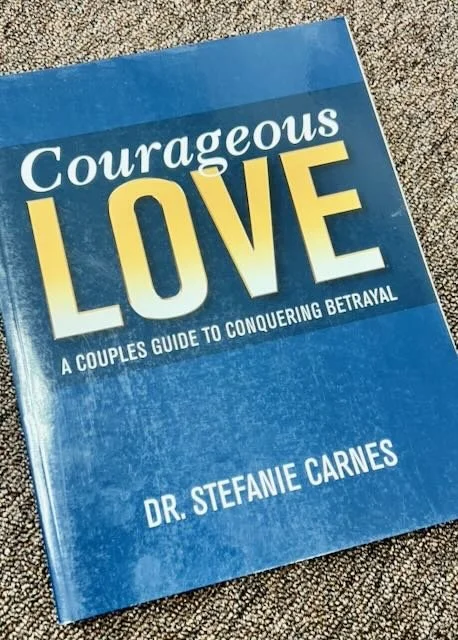
Courageous Love: A Couples Guide to Conquering Betrayal
Stefanie Carnes, PhD, CSAT-S (2020)
Best for: the couple who has decided to fight for the relationship and needs a map for doing it together.
There's nothing that can rupture the loving connection between a couple like betrayal. What I like about Courageous Love is that it's truly a step-by-step guide for repairing a relationship damaged by infidelity, pornography, or compulsive sexual behavior. It helps couples learn how to respond to each other with compassion and empathy — and to lean into the hope of the relationship, taking practical steps toward overcoming the betrayal together.
Duane's note: What moves me about this book is its core belief: if a couple really wants to succeed, they can. They can get to the other side of that trauma and genuinely love each other in a deep way. This book talks to restoration — and after fifteen years of doing this work, I can tell you that restoration is real. I've watched it happen.
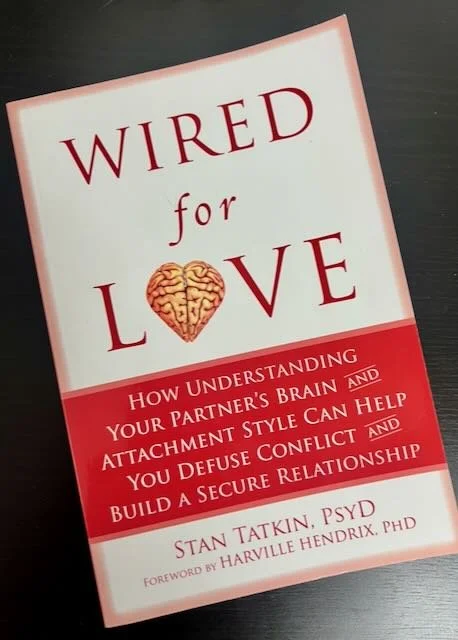
Wired for Love
Stan Tatkin, PsyD, MFT (2011; expanded 2nd edition 2024)
Best for: couples who've moved past the acute crisis and are ready to understand the deeper attachment patterns underneath it all.
This is one of my all-time favorite books for couples — I recommend it to almost every couple that comes in to work on repair. Stan takes complex concepts of attachment and brings them into terminology that's useful and understandable, with very practical steps for the underlying attachment issues that show up in any relationship.
One important note: this book isn't written specifically for betrayal, and I don't usually recommend it at the beginning, when a couple is in acute crisis. But once the crisis has settled, this book is incredibly valuable — it's the work that helps a couple build something more secure than what they had before.
Duane's note: I had the honor of sitting down with Stan for a four-part conversation on the Shame to Resilience channel, where he speaks directly to betrayal through the lens of attachment — including why you can't stop asking questions, guilt vs. shame after betrayal, and boundaries and good-faith effort. If you read this book, watch those conversations alongside it.
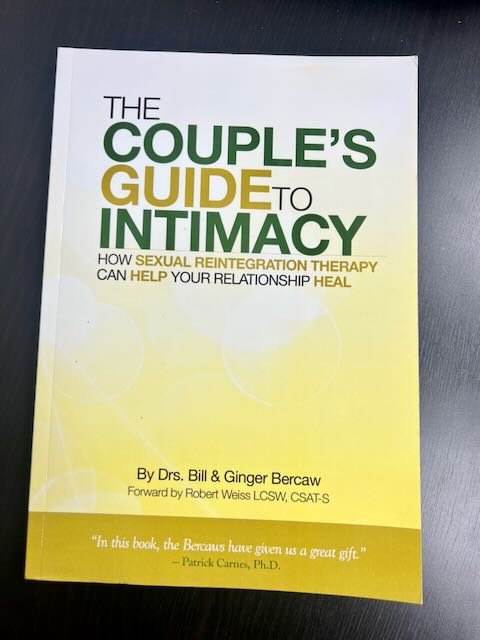
The Couple's Guide to Intimacy: How Sexual Reintegration Therapy Can Help Your Relationship Heal
Dr. Bill Bercaw, PsyD, CSAT, CST & Dr. Ginger Bercaw, PsyD, CSAT, CST (2010)
Best for: couples later in recovery who have rebuilt safety and are ready to gently reclaim sexual intimacy.
This is a book on sexual reintegration, written specifically for couples who have experienced betrayal or sex addiction in their relationship. It's a step-by-step guide that helps couples do this tender work in a slow, safe fashion — and it's very practical, enabling couples to build real, strong closeness again. I've worked with many couples through this guide as they reclaim intimacy, and I've seen what's possible on the other side.
Duane's note: One important note: this is a book for later in recovery, after a foundation of safety has been solidly built. I would not recommend it to couples just beginning the journey after betrayal — rebuilding physical intimacy before emotional safety exists usually backfires. But when the time is right, this book is how you take that step together, carefully and with hope.
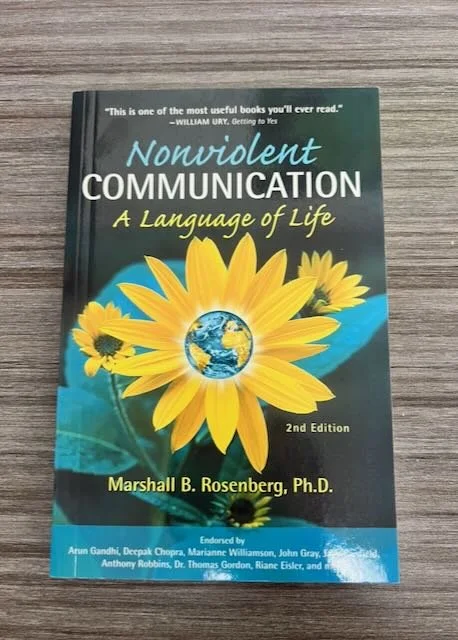
Nonviolent Communication: A Language of Life
Marshall B. Rosenberg, PhD (3rd edition, 2015)
Best for: couples who keep having the same painful conversation and getting nowhere — because nobody ever taught them the language for conversations this hard.
This book is great for couples learning healthy ways to navigate difficult conversations — the kind that promote healing and recovery instead of another rupture. What's also powerful about it is the structure it gives you. Most of us simply don't have the languaging for talks this painful, and Rosenberg provides a simple, repeatable framework — observations, feelings, needs, requests — that you can lean on when emotions are running high and the old words keep making things worse.
Duane's note: I often suggest this book to the betraying partner specifically, to help him communicate compassionately with his partner — because when she feels heard and understood, something in the nervous system can finally settle. In betrayal recovery, being truly heard is safety. This book teaches you how to offer that.
For Building Shame Resilience
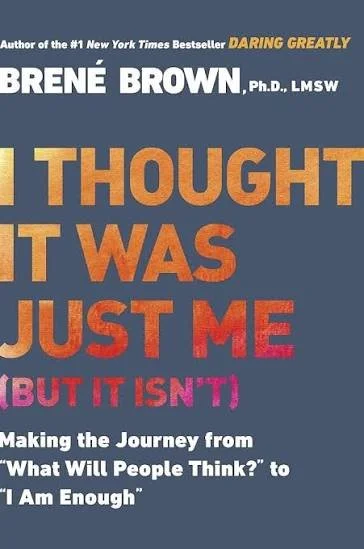
I Thought It Was Just Me (But It Isn't)
Brené Brown, PhD, LMSW (2007)
Best for: both of you — because underneath betrayal, on both sides of it, is shame.
This is the book where shame resilience theory was born, and it's the reason this section exists. Betrayal drenches everyone it touches in shame — the betrayed partner asks "wasn't I enough?", and the partner who caused harm hides from what he's done. Brené Brown shows, with research and enormous compassion, that shame cannot survive being spoken and met with empathy. Learning to recognize shame, name it, and reach out instead of hiding — that's shame resilience, and it's the skill that makes every other book on this list work.
Duane's note: Shame is at the very center of my work — it's in the name of this site. Dr. Donald Nathanson mapped the four ways we run from shame in what he called the Compass of Shame, and I've put together a free, plain-language guide to it: [download the Compass of Shame eBook here]. Start with Brené's book, then use the Compass to see your own patterns.
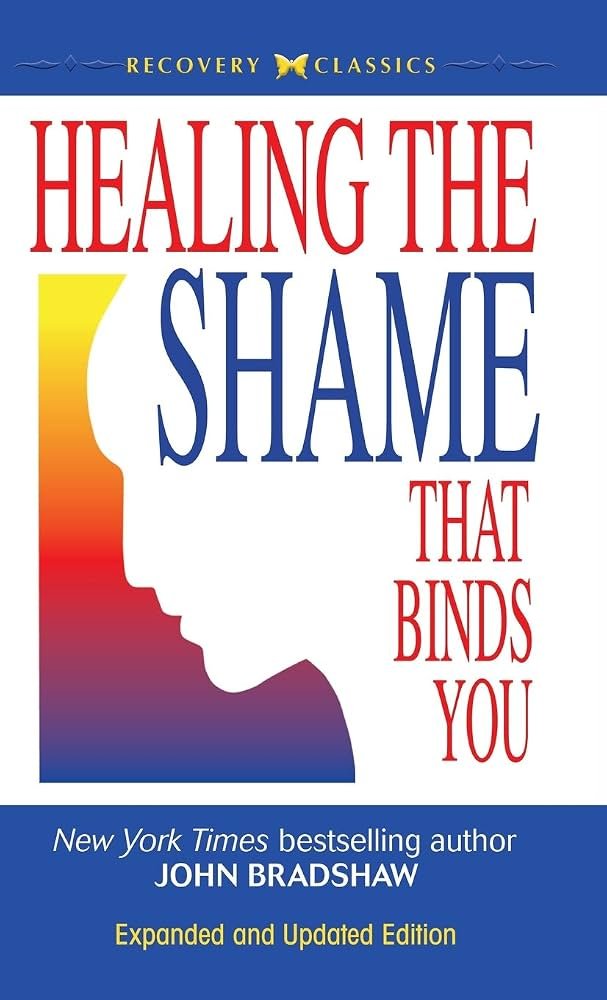
Healing the Shame That Binds You
John Bradshaw (1988; revised & expanded 2005)
Best for: anyone ready to trace their shame back to its roots — especially the partner whose compulsive behavior sits on top of shame that began long before this relationship.
This is the classic on toxic shame — Bradshaw is where that language comes from. He draws the distinction that changed how I work with clients: healthy shame tells you "I made a mistake"; toxic shame tells you "I am a mistake." When shame becomes identity instead of emotion, we hide, we numb, and we act out — and Bradshaw traces how that internalization happens, often in childhood and family systems, long before the behavior that brought you to this page. If TINSA helped you understand the neurobiology, this book helps you understand the story.
Duane's note: In my experience, the men who do the deepest repair work are the ones willing to face not just what they did, but the shame that was driving it. This book is that excavation. It's not always an easy read — but binding shame loses its power the moment you can see it clearly.
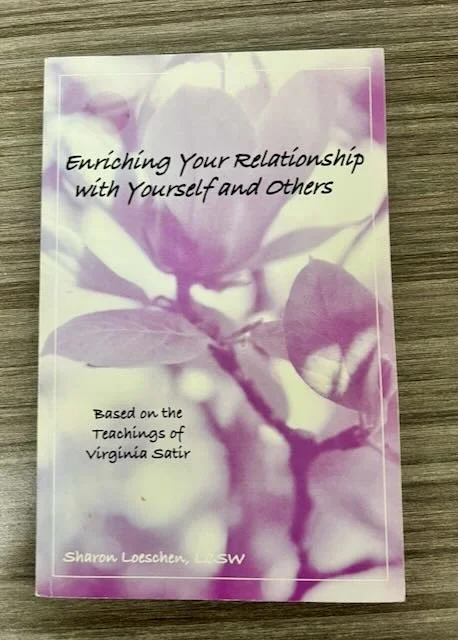
Enriching Your Relationship with Yourself and Others
Sharon Loeschen, LCSW — based on the teachings of Virginia Satir
Best for: anyone further along the road — past the crisis, cultivating trust — who's ready for the transformation this whole journey points toward.
This book isn't directly about sex addiction, compulsive sexual behavior, or betrayal trauma — and that's exactly why it's here. It offers a model of genuinely healthy human connection, and it's good for everyone trying to enrich their relationships, which is the goal of recovery and all of this work. It's filled with hope, compassion, understanding, and kindness — which is what all relationships are built upon. This is a later-in-recovery book: after you've moved past the crisis and the scaffolding stage of rebuilding, when you're cultivating trust and moving toward transformation. And because it helps you cultivate a relationship with yourself that isn't built around a shame core, it's a beautiful book for building shame resilience.
Duane's note: This recommendation is personal. I'm an Enriching trainer myself — I trained directly with Sharon Loeschen — and I cannot recommend her work more highly as a compassionate guide toward an enriching relationship with yourself and the people you love. If this list has a destination, this book is it.
Why the Right Books (and Support) Matter
It's one thing to read about betrayal trauma and think, "Well, that sounds familiar." It's another thing entirely to open a book and feel like it's speaking directly to you. To the person who hasn't slept. The person trying to piece life back together one hour at a time. The man who finally sees the damage and doesn't know where to start.
The right book at the right moment does more than give you information. It gives you validation. A sense of being seen. And oftentimes that first small glimmer that maybe, maybe, hope is possible here.
But I want to be honest with you about something. Books alone aren't always enough. Even the best one on this list can leave you with big, burning questions and a longing for someone who actually gets it. Someone who can look you in the eye — even over a screen — and say, "You're not losing your mind. This is hard. And you don't have to do it alone."
What I see in my work, over and over, is that the shift happens when foundational reading gets paired with real, compassionate support. A partner reads The Betrayal Bind and then sits in a room with people who've lived it. A man reads Help Her Heal and then brings what he learned into a community of men who are doing this work honestly, holding him to it. And something changes. The question moves from "Why am I still stuck here?" to "It makes sense that I feel this way. And I can keep going."
That's the piece. Hearing echoes of your own story in someone else's doesn't just take the edge off the isolation. It makes healing feel possible. We heal through the eyes of others. I really believe that.
And if you've tried everything — late-night scrolling, years of counseling, every podcast you can find — and you still feel stuck, you are not failing. You're not. Sometimes it just takes the right mix. Books that reflect your reality, and a supportive, judgment-free space where you can say the true thing out loud. A group. A workshop. A therapist who understands betrayal trauma specifically. Over and over, that combination is what becomes the turning point. Not just for one person. For the whole family.
Healing from betrayal was never meant to be a do-it-yourself project. It's hard work. It's really, really hard work. But when you find the right resources and the right people to walk beside you, the road gets a little lighter. And those glimmers of hope start to shine just a bit brighter.
Common Questions About Betrayal Trauma Books
-
It depends on which chair you're sitting in. For the betrayed partner, I recommend starting with The Betrayal Bind by Michelle Mays — it's the book most of my clients say finally made them feel understood. For the partner who caused the harm and wants to repair it, start with Help Her Heal by Carol Juergensen Sheets. There's no single best book for both chairs, because the work is different in each.
-
In those first raw weeks, you need two things: validation and structure. The Betrayal Bind will help you understand what's happening inside you, and Facing Heartbreak gives you a step-by-step workbook so you know what to do next. Go slowly — you don't have to read everything at once.
-
Yes — an entire section of this list is written for you. If you feel genuine remorse and want to show up for your partner, start with Help Her Heal, then work through Full Disclosure when it's time to share the truth. Reading these books is one of the first concrete ways to show your partner you're serious about the work.
-
No. Books are companions on this journey — they build understanding and hope, but they're not treatment. Betrayal trauma is real trauma, and working with a therapist who specializes in it makes an enormous difference. If you're not sure where to start, you can book a free 15-minute consultation with our team. And if you're in crisis right now, please reach out to the 988 Suicide & Crisis Lifeline by calling or texting 988.