How He Sat Across From You Like Nothing Happened: Dismissive Avoidant Attachment and Secret Keeping

You replay the dinners and the vacations and wonder how he could sit there. Dr. Stan Tatkin on the attachment pattern underneath secret keeping — and why repair has to go deeper than a promise to be honest.
By Duane Osterlind, LMFT, CSAT-S

You keep replaying the dinners. The vacations. The Sunday mornings he passed the cream and asked about your day with a second life folded quietly inside him. And the part that won’t let you sleep isn’t only what he did. It’s that he could sit there. He could look at you. He could be there and not be there at the same time.

You’re not crazy and you’re not exaggerating. There’s a name for what you were sitting across from and it has its own developmental fingerprint.

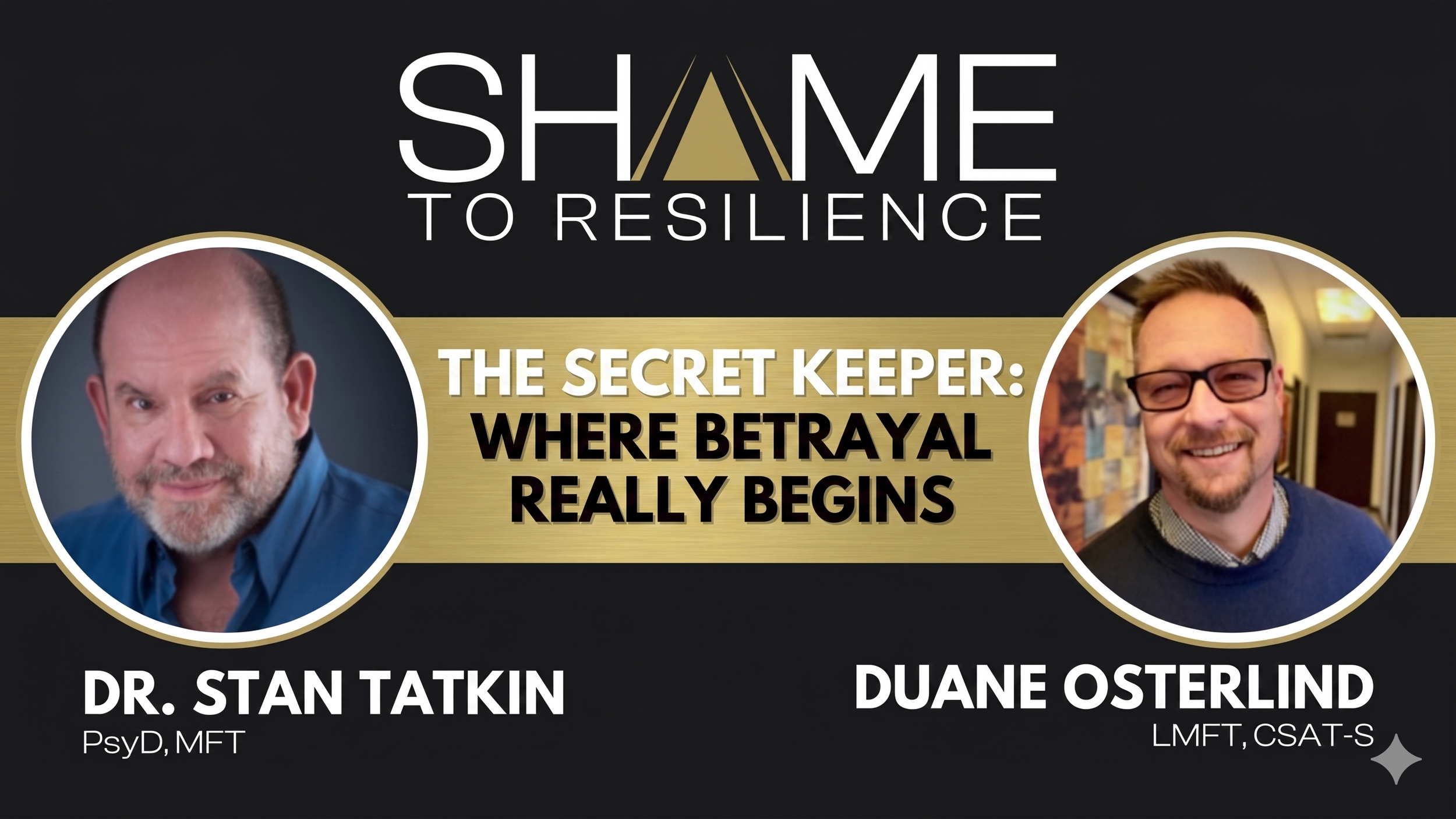
In part three of my four-part series with Dr. Stan Tatkin — developer of PACT and author of Wired for Love and In Each Other’s Care — we trace the capacity for secret keeping all the way back to infancy. To something called dismissive avoidant attachment.

This isn’t an excuse. It’s a map. You can’t change what you can’t see, and neither can he.

The Pattern Underneath the Secrets

Most men who become long-term secret keepers don’t have a hundred different stories. They have one. Stan put it plainly: the large majority of these partners fall into the distancing group of insecure attachment — what clinicians call avoidant or dismissive avoidant. Almost across the board.

The behaviors you experienced weren’t random. The moral equivalencies. The flash of anger when you asked a simple question. The hesitation, the half-truth, the carefully arranged silence. They map back to a very specific origin story and once you see the shape of it the chaos starts to make a different kind of sense.

If you want a primer on why honest answers alone don’t actually rebuild trust, I unpack that in Why Transparency Isn’t Enough After Betrayal.

What Dismissive Avoidant Attachment Actually Looks Like

A securely attached baby has at least one adult who is genuinely interested in their inner world. Skin to skin. Eye to eye. Curious about what’s happening behind those tiny eyes and reliable about coming back when they leave the room.

When that’s missing the baby does one of two things. Some cling. They cry harder, reach further, melt down when mom walks out and won’t be soothed when she comes back. Others go the opposite way. They stop reaching. They stop tracking her across the room. They stop looking up when she walks in. The “pick me up, pick me up” gets quietly extinguished — not because the want isn’t there but because no one ever met it.

Those are the avoidant babies. They learn to play alone but it’s a thin, jerky kind of play. The caregiver doesn’t change so the trajectory doesn’t change either. The child’s distancing reliably pulls the same distance back out of the environment and the loop tightens. Researchers call this the strange situation and it’s been replicated for half a century.

This is the man who later sits across from you at dinner.

Why Secret Keeping Isn’t a Choice — It’s an Adaptation

Here’s the line every betrayed partner deserves to hear Stan say out loud. For these men, keeping the inside hidden isn’t just easier. It’s predicted.

The avoidant child learned early that there was no one to share with. So he spent more time alone. He learned to auto-regulate — a kind of self-soothing that doesn’t want or require another person. He got used to compartmentalizing because nobody was interested in the contents anyway. He lives in a hyper-focused inner world, the same neural territory you’d visit zoning into a movie or a game, except for him it’s not an occasional retreat. It’s the default.

Stan names something else that lines up with what we see clinically every day. This group tends to carry more shame than the rest. More sexual secrets. More unspoken material. They also carry far more interpersonal stress than they’re aware of, which is why being in connection with you for long stretches actually costs them. It’s not that he didn’t love you. It’s that being with you was metabolically expensive in a way being alone never was.

If you’ve felt invisible in your own marriage, that’s part of what you were bumping into. For more on how his nervous system pulls away from you the moment you’re in pain — and what that does to your brain — read Your Defensiveness Is Re-Traumatizing Your Partner’s Brain.

The Fantasy Bond: Why His “Love” Could Feel So Lonely

Stan references something the psychologist Robert Firestone called the fantasy bond. You can read more about Firestone’s work at The Glendon Association. The fantasy bond is what an avoidant child builds when real connection isn’t on offer — an internal stand-in for attachment that feels like love but functions like a closed loop. He makes it secure in his head because it was never secure in real life.

Carried into adulthood, it shows up in ways that sting if you’re the one in the room with him. He treats you like a self-object. He expects you to feel what he feels, want what he wants, see what he sees and when you don’t it lands like an attack. Disagreeing about a movie can feel like betrayal to him. You come home from a hard trip and he describes it as great — not because he’s gaslighting you but because he wasn’t actually with you. He was playing alone in his head the whole time.

Sex can feel like you’re interchangeable. Like it could be anyone. Because in some real sense he’s auto-regulating, not relating.

None of this softens what he did. It explains why “just tell me everything from now on” feels almost biologically impossible for him, and why repair has to go much deeper than a promise to be honest.

The Hardest Part of Recovery: Letting the Old Relationship Die

Now lay all of that over what’s happening between you right now.

When you finally say, with your whole body, “I’m out — go fix this and maybe you come back to me,” his system spikes. You may not see it. It often happens internally. The very thing he’s quietly leaned on as his secure base is revoking that status and his inner world rearranges fast.

This is the moment Stan calls out without flinching: the relationship you had is over as you thought it was. It can’t be the same. It has to be a complete rebuild. Anything less is theater.

That’s not a threat. It’s the actual scope of the work. Trying to glue the old marriage back together is what keeps couples stuck for years. The path forward is a different relationship between two changed people and that starts with him owning what shaped him without using it as a hiding place.

If you want a concrete picture of how trust gets rebuilt — one repeatable action at a time — read 3 Actions That Build Safety After Betrayal. Paired with this episode, those two practices carry most of the load.

What This Means for the Man Who Kept the Secrets

If you’re the partner who kept things hidden, this may be the first time someone has described your inner life back to you in a way that lands as accurate instead of accusing. Stay there for a second. Don’t run.

You did not choose dismissive avoidant attachment. You inherited an adaptation that worked very well when you were small and very poorly inside an adult relationship. That’s a real thing. It’s also not a shield. The harm is yours. The repair is yours. The accountability is yours.

The good news from Stan’s body of work is that adaptations can be updated. Brains keep adapting across the lifespan. What it takes is the willingness to do the actual work and the willingness to let this relationship be rebuilt rather than rescued. Those are two different jobs.

Catch Up on the Series

This is part three of a four-part conversation with Dr. Stan Tatkin. If you missed the earlier episodes, start with the neuroscience and then move into how boundaries actually work.

Part 1: What Betrayal Actually Does to Your Brain

Part 2: Boundaries After Betrayal — Why “Good Faith Effort” Is the Only Path Forward

A Word Before You Close This Tab

If you’re the betrayed partner reading this, you don’t have to decide anything today. You don’t have to forgive. You don’t have to stay. You don’t have to leave. You’re allowed to take the time your nervous system needs and you’re allowed to ask for the real thing — not the performance.

If you’re the man who caused harm, the next right step isn’t a grand gesture. It’s getting honest about the adaptation that’s been running you and getting real support to interrupt it. That’s slower work than most men want it to be. It’s also the only work that holds.

When you’re ready to look at what that work actually looks like in community with other men doing it, the Shame to Resilience workshop is one place to start. No pressure and no countdown. Just a door, open when you’re ready to walk through it.

Read More

What Betrayal Actually Does to Your Brain: The Neuroscience Your Partner Needs You to Understand

PACT developer Dr. Stan Tatkin explains why discovery of betrayal hijacks the brain, why obsessive questioning is biological, and why partners can’t “just move on.”
If you’ve discovered your partner’s betrayal and you can’t stop asking questions — if you’re up at 3 a.m. replaying every holiday, every conversation, every moment you thought was real — there is nothing wrong with you. Your brain is doing exactly what it’s designed to do.

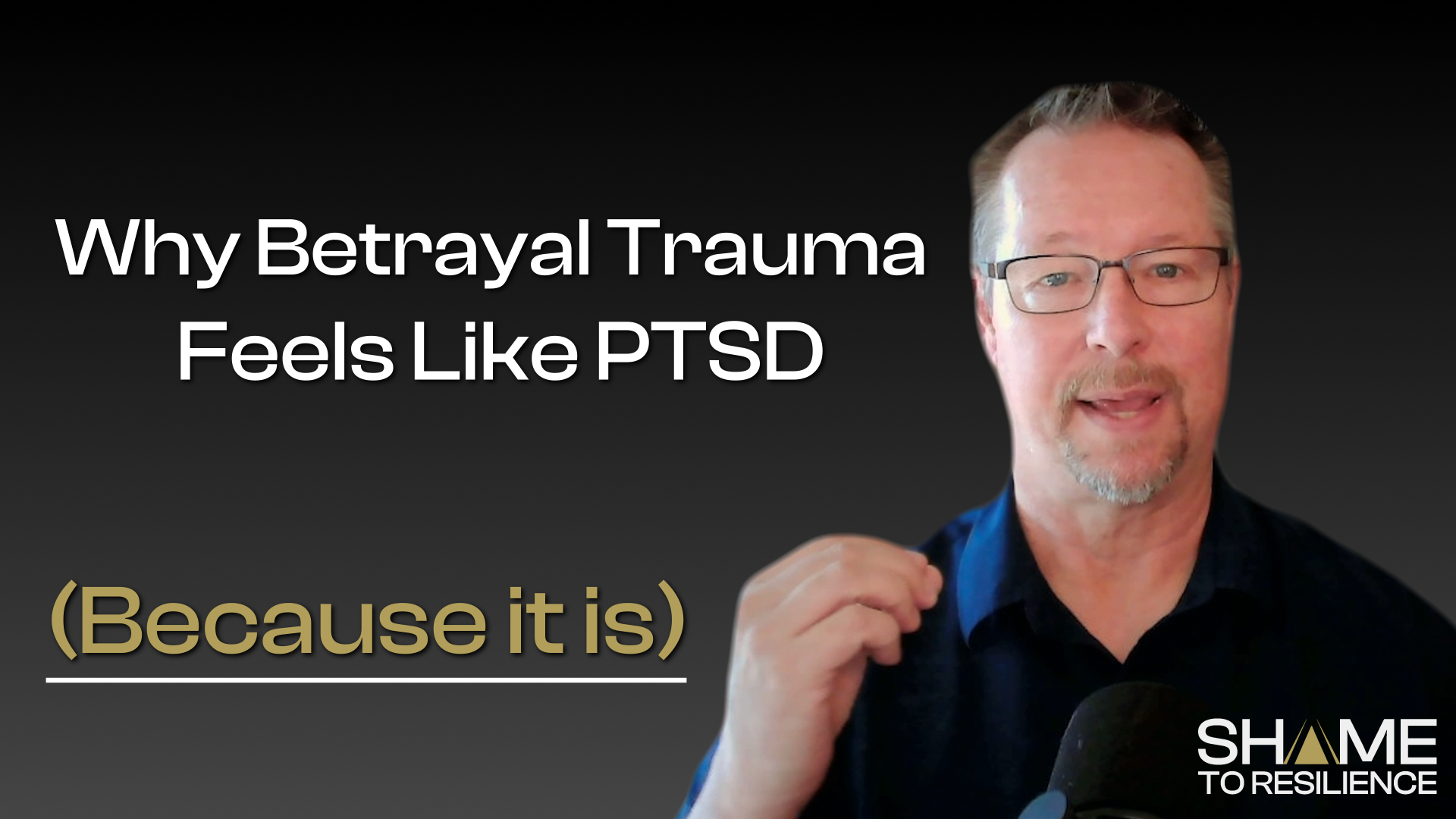
I recently sat down with Dr. Stan Tatkin, the developer of PACT (a psychobiological approach to couples therapy) and the author of Wired for Love and In Each Other’s Care. Having completed his Level 1 training myself, I can tell you it changed how I do couples work. And what he shared about what’s happening in the brain after betrayal is discovered is some of the clearest, most validating information I’ve heard on this topic.

Let me walk you through it.

First, What Actually Counts as Betrayal?

Stan made an important distinction at the start of our conversation. People use the word “betrayal” for all sorts of things — your partner buying something they said they wouldn’t, telling someone a secret they had no right to share. Those things hurt, but they don’t produce the kind of neurological injury we’re talking about here.

The kind of betrayal that creates trauma is something specific. As Stan explained, it’s the discovery of vital information that you had a right to know but were deprived of — information that, once discovered, changes everything: who you thought you were, who your partner is, what’s true, what’s not true, and your identity within the relationship.

The major violation is the lack of free flow of information — omission, lying by omission on something big. That’s what does the damage. — Dr. Stan Tatkin

This matters because it reframes the wound. The sexual element of an affair isn’t pleasant, but it’s not actually what produces the trauma response. The deception is. The systematic withholding of information that the betrayed partner had every right to know is what hijacks the nervous system.

What Happens in the Brain at Discovery

When that vital information lands, the discovery partner experiences a measurable set of symptoms that mirror PTSD. Stan listed them clearly: mood instability, sleep problems, flashbacks, paranoia, thoughts that won’t go away, questions that have to be asked, and the disorienting feeling of “sleeping with the enemy” — of no longer being able to know the person they thought they knew.

This isn’t a judgment. It isn’t a personality flaw. As Stan put it, this happens by proof — it just is a fact.

And here’s the part that I think is the most important thing he said. The brain doesn’t ask your permission to do this.

My brain will automatically re-sort this new data, and it will be busy for quite some time — especially if it was back in the beginning. — Dr. Stan Tatkin

The new information intrudes on every memory the betrayed partner has of the relationship. It has to be re-sorted. Every birthday. Every anniversary. Every conversation. Every “I love you.” The brain runs this process automatically, without conscious choice, because it has to reconstruct who you are, who your partner is, and what your shared history actually means.

Stan was direct about this: people who judge the discovery partner for being “still upset” or “still perseverating” months after discovery are missing the science. The mind can’t do anything else. In the first year especially, this is what every brain does when it encounters this level of identity-shattering information.

Why You Can’t Stop the Questions

In our conversation, I shared a way I often think about this: to know our environment is to keep ourselves safe. If we can’t know our environment, we can’t predict our environment. And if we can’t predict our environment, our brain can’t get to a state of safety — because it doesn’t know what to do.

Stan agreed. He pointed out that humans aren’t actually safe most of the time — we just have a denial system that protects us from thinking about it constantly. After betrayal, that denial system collapses. And the brain goes into overdrive trying to rebuild a coherent picture of reality.

That’s why the questions don’t stop. The brain isn’t trying to torture anyone. It’s trying to gather enough data to reorganize the file system. To answer: Who is this person, really? What was true? What was a lie? Can I predict what they’ll do next? Until those questions have answers — honest, complete, consistent answers — the brain will keep asking.

What This Means for Your Healing

If you’re the betrayed partner reading this, I want you to hear what Stan said: you’re not crazy. You don’t have a personality disorder. You’re not being dramatic. Your nervous system is responding to a real injury in the way nervous systems are designed to respond.

And if you’re the person who caused the betrayal, this is the part that matters: you cannot talk your partner out of this process. You cannot reason them out of it. You cannot apologize them out of it. Their brain has to do its job, and your job is to provide the consistent, honest, predictable behavior that gives their brain enough data to eventually let down its guard.

I break down the specific neuroscience of this — what happens in the amygdala, hippocampus, and prefrontal cortex — in our complete guide to the neurobiology of betrayal trauma. And if you want to understand the symptoms your partner is experiencing through a clinical lens, I cover that in Why Betrayal Trauma Feels Like PTSD.

In Part 2 of my conversation with Stan, we get into something that I think is even harder to hear but just as important: boundaries. Not as punishment, but as the mechanism that actually gives relationships a chance to heal. I’ll link to that next.

Watch the full series:

Related reading:

About Dr. Stan Tatkin:

Dr. Stan Tatkin is the developer of PACT (Psychobiological Approach to Couples Therapy) and the author of Wired for Love and In Each Other’s Care. Learn more at thepactinstitute.com

Duane Osterlind, LMFT, CSAT-S

About the Author

Duane Osterlind, LMFT, CSAT-S

Licensed Marriage & Family Therapist  ·  Certified Sex Addiction Therapist Supervisor  ·  Founder & Clinical Director, Novus Mindful Life Institute  ·  Licensed in CA, FL, TX, VA & ID

Duane Osterlind is a therapist with over 15 years of experience helping men recover from infidelity, sex addiction, and betrayal trauma. He is the founder and clinical director of Novus Mindful Life Institute, where he leads a clinical team specializing in sex addiction and betrayal recovery. He is also the co-founder of Shame to Resilience and host of The Addicted Mind Podcast. His clinical work centers on the Compass of Shame framework and building shame resilience so that empathy — the essential ingredient for relationship healing — becomes possible.

Read More

Why Betrayal Trauma Feels Like PTSD (Because It Actually Is)

If you’ve discovered your partner’s betrayal and feel like you’re losing your mind, I want you to know: you aren't crazy. You're injured. Research shows that 60-70% of betrayed partners meet the criteria for PTSD, meaning your sleepless nights and intrusive thoughts aren't "drama"—they are legitimate responses to a traumatic brain injury.

In this post, we explore the neuroscience behind your pain, explaining why your "alarm system" is stuck in overdrive and why you can't just "get over it." But more importantly, we discuss neuroplasticity and the scientific proof that your brain can heal. Recovery is possible, and it starts with understanding that your reaction is a normal response to an abnormal situation. Read on to find validation, science-backed insights, and a roadmap back to yourself...

If you have discovered your partner's infidelity or sexual betrayal, you might feel like your world has tilted on its axis. You can’t sleep. You can’t eat. You find yourself obsessively checking their phone or tracking their location. You might be having panic attacks or feeling a rage you’ve never known before.

And perhaps the most frightening thought creeping in is: "Am I losing my mind?"

I want to look you in the eye—metaphorically speaking—and tell you something crucial: You are not crazy. You are not "being dramatic." You are experiencing a legitimate, physiological response to trauma.

Research indicates that between 60% and 70% of partners who experience betrayal meet the full clinical criteria for Post-Traumatic Stress Disorder (PTSD). What you are feeling isn't just heartbreak; it is a traumatic brain injury. Understanding this biological reality is the first step toward compassion and healing.

Download The Worksheet

Betrayal is Trauma, Not Drama

When we think of PTSD, we often picture combat veterans or survivors of physical accidents. But emotional betrayal by an intimate partner strikes at the very core of our survival instincts. We are wired for connection. When the person who is supposed to be your safe harbor becomes the source of danger, your brain’s safety systems go haywire.

It’s heartbreaking to see so many betrayed partners blaming themselves for their inability to "just get over it." You might wonder why you’re still triggering months later, or why you can't stop asking the same questions.

This isn't a character flaw. It’s neurology. Just as you wouldn’t expect a broken leg to heal in a week by simply "thinking positive," you cannot expect a traumatized brain to snap back to normal overnight. Recovery takes time—often 18 to 24 months for acute symptoms to stabilize, and 3 to 5 years for full integration.

That timeline might sound daunting, but knowing it can be a relief. It means you aren't failing at recovery; you are right on schedule for a major injury.

Your Brain on Betrayal: The Three Key Players

To understand why you feel this way, we need to look at three specific regions of your brain that are profoundly affected by trauma.

1. The Amygdala: The Alarm System

The amygdala is your brain's threat detection center. It’s like a smoke detector scanning for danger. When you discover betrayal, this alarm gets stuck in the "ON" position. It becomes hyperactive and sensitized.

This is why you feel constant anxiety, hypervigilance, and that jittery sensation that you can never truly relax. Your body is flooded with stress hormones like cortisol and adrenaline, keeping you in a perpetual state of fight, flight, or freeze. You aren't being paranoid; your nervous system is desperately trying to protect you from another surprise attack.

2. The Hippocampus: The Memory Center

The hippocampus is responsible for processing memories and filing them away as "past events." When trauma hits and cortisol floods your brain, the hippocampus gets impaired. It stops filing properly.

This results in intrusive flashbacks, nightmares, and obsessive rumination. Your brain is trying to process an event that feels too big to file away. Instead of becoming a dusty memory on a shelf, the trauma stays on your mental desktop, open and active. This is why you replay details over and over—your brain is trying to make sense of a narrative that has been shattered.

3. The Prefrontal Cortex: The CEO

This is the part of the brain responsible for logic, emotional regulation, and decision-making. During trauma, blood flow and energy are diverted away from this "thinking brain" and sent to the "survival brain" (the amygdala). Your inner CEO essentially goes offline.

This explains the "brain fog," the difficulty concentrating, and the emotional mood swings. If you feel like you don’t recognize yourself—like you’ve lost your ability to be calm or rational—it’s because your executive function is temporarily impaired.

The Six Core Trauma Responses

Once we understand the brain science, your behaviors start to make a lot more sense. These aren't symptoms of being "controlling" or "weak"; they are the six core responses to betrayal trauma.

  1. Hypervigilance: Scanning for threats, checking phones, monitoring bank accounts. This is your amygdala screaming for safety.

  2. Intrusive Thoughts: Flashbacks and obsessive thinking. This is your hippocampus struggling to process the reality of what happened.

  3. Avoidance: Staying away from places, songs, or shows that remind you of the betrayal to avoid pain.

  4. Emotional Dysregulation: Intense mood swings, rage followed by despair. Your prefrontal cortex is struggling to regulate your feelings.

  5. Dissociation: Feeling numb, foggy, or like you are watching your life from the outside. This is your brain's way of distancing you from overwhelming pain.

  6. Functional Impairment: Struggling to work, parent, or take care of daily tasks.

If you see yourself in this list, take a deep breath. You are reacting exactly as a human brain reacts to deep trauma.

Why This Reframe Changes Everything

Why does it matter that we call this trauma? Why not just call it a "relationship issue"?

Because understanding this as a brain injury changes how you treat yourself. It allows you to trade shame for self-compassion. Instead of beating yourself up for checking his phone again, you can say, "My amygdala is terrified right now and looking for safety."

It also changes how you approach treatment. You wouldn't treat a broken bone with a band-aid. Trauma requires trauma-informed care—individual therapy, nervous system regulation, and safety—before effective couples counseling can usually begin.

Most importantly, it validates your pain. You aren't overreacting. You are injured.

Hope: Your Brain Can Heal

I want to leave you with the most important piece of science: Neuroplasticity.

Neuroplasticity is your brain's amazing ability to rewire itself. The damage caused by betrayal is not permanent. With the right support, safety, and time, your amygdala can learn to stand down. Your hippocampus can file these memories away where they belong—in the past. Your prefrontal cortex can come back online, restoring your sense of self.

You can heal. You can trust your gut again. You can feel joy again.

Recovery is a marathon, not a sprint. But every time you offer yourself kindness instead of judgment, every time you reach out for safe support, you are helping your brain repair those pathways. You are moving from brokenness toward resilience.

Need more support?
If you are struggling with the symptoms of betrayal trauma, you don't have to do it alone.

Meta Title: Why Betrayal Trauma Feels Like PTSD: Understanding Your Brain
Meta Description: Discover why betrayal trauma feels like PTSD. Learn about the brain's trauma response, the amygdala hijack, and why you aren't "crazy"—you're injured.

Duane Osterlind, LMFT, CSAT-S

About the Author

Duane Osterlind, LMFT, CSAT-S

Licensed Marriage & Family Therapist  ·  Certified Sex Addiction Therapist Supervisor  ·  Founder & Clinical Director, Novus Mindful Life Institute  ·  Licensed in CA, FL, TX, VA & ID

Duane Osterlind is a therapist with over 15 years of experience helping men recover from infidelity, sex addiction, and betrayal trauma. He is the founder and clinical director of Novus Mindful Life Institute, where he leads a clinical team specializing in sex addiction and betrayal recovery. He is also the co-founder of Shame to Resilience and host of The Addicted Mind Podcast. His clinical work centers on the Compass of Shame framework and building shame resilience so that empathy — the essential ingredient for relationship healing — becomes possible.

Read More